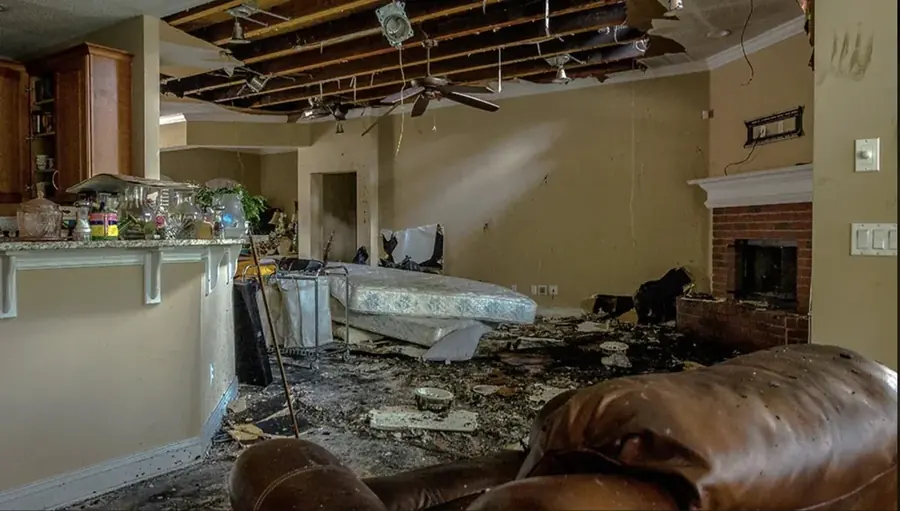
A stained, sagging ceiling means water is pooling above it. The crew finds the interior source, dries the ceiling and the cavity, and stops it before it comes down.
A ceiling leak is almost always a sign of water pooling in the space above, and in a Milwaukee two-story or a multi-unit building the source is usually inside: a supply line, a drain, an overflowing fixture, or the unit upstairs. This is different from a roof leak, where water comes from the weather through the roof. A wet ceiling that sags is also a safety issue, because saturated drywall gets heavy and can come down, so speed matters.
Where the water is really coming from
Finding the true source is the first job, because the stain is often not below the leak:
A supply or drain line running above the ceiling
An overflowing tub, toilet, or sink in the room or unit above
A leaking shower pan or tile in an upstairs bathroom
A radiator or heating line in an older Milwaukee flat
Water travels along joists and follows the path of least resistance, so it can show up feet away from the actual leak. The crew traces it with moisture meters and thermal imaging instead of guessing.
A sagging ceiling is a hazard
Do not ignore a bulging or dripping ceiling, and do not stand under it:
A wet drywall ceiling holds pounds of water and can collapse
Keep people and pets out of the room below
Place a bucket only if you can do it safely from the side
Shut off the water to the fixture above if you know the source
Call and the crew relieves the water safely, then dries the assembly. A controlled drain is far better than a surprise collapse.
Ceiling stained or sagging? Keep out from under it and call. A Milwaukee crew can be out the same day to relieve and dry it.
A plumber stops the source where needed, the crew relieves trapped water safely, and the ceiling, insulation, and cavity dry with air movers and dehumidifiers. Only the drywall that cannot be dried comes out, and the walls below get checked for water that ran down. The loss ties into the structural drying and, if the water came from a burst line, the burst pipe service, with claim-ready documentation for your carrier.
How it works
How ceiling leak water damage is handled in Milwaukee
1
Call & dispatch
A dispatcher answers 24/7 and the nearest Milwaukee crew rolls with truck-mounted pumps, air movers, and moisture meters.
2
Find the source & the reach
The mitigation team stops the water at the source and maps how far it spread, including what soaked into subfloor, block, and wall cavities.
3
Extract & dry
The extraction crew pulls the standing water, then runs air movers and dehumidifiers to a verified dry standard, not just the surface.
4
Verify & document
The drying team logs moisture readings until the structure is dry, then documents the loss with claim-ready photos and readings.
Cost
What does ceiling leak water damage cost in Milwaukee, WI?
In Milwaukee, WI, ceiling leak water damage cleanup usually runs $700 to $3,500, depending on how much of the ceiling and cavity got wet and whether the drywall has to come down. A small contained stain is cheaper than a saturated, sagging ceiling.
See a fuller range with the water damage cost calculator. Most water damage is covered by insurance, and the restoration contractor documents the loss for your carrier.
Water damage in Milwaukee or Milwaukee County? Call (414) 895-6813, 24/7.
Service area
Every Milwaukee neighborhood covered
Milwaukee, WI
The response team covers the East Side, Bay View, Riverwest, Sherman Park, Washington Heights, Walker's Point, and every corner of Milwaukee County, day or night.
My ceiling is sagging and dripping. Is it going to fall?
It can. Wet drywall holds a lot of weight. Keep everyone out from under it, do not poke it from below, and call (414) 895-6813 so the crew can relieve the water safely and dry the ceiling before it collapses.
How do you find where a ceiling leak is coming from?
The crew traces it with moisture meters and thermal imaging, because water travels along joists and the stain is often not directly below the source. Finding the real origin beats just patching the stain.
Is a ceiling leak a roof problem or a plumbing problem?
Either. If the water follows rain and storms it is likely a roof leak; if it happens independent of weather it is usually an interior pipe, drain, or an overflow from the unit above. The crew identifies which so it gets fixed at the source.
Will you have to replace the whole ceiling?
Not always. If drying starts soon, the ceiling and cavity can often be saved, with only saturated or sagging drywall removed. Fast drying is what preserves the most.
Does insurance cover ceiling water damage?
Sudden interior leaks are generally covered. The restoration contractor documents the source and the damage with photos and readings for your carrier for the covered work.
24/7 emergency dispatch
Milwaukee's water damage crew is standing by
Water sitting means damage spreading. Call Milwaukee Foundation & Waterproofing and a Milwaukee crew is dispatched, 24/7.