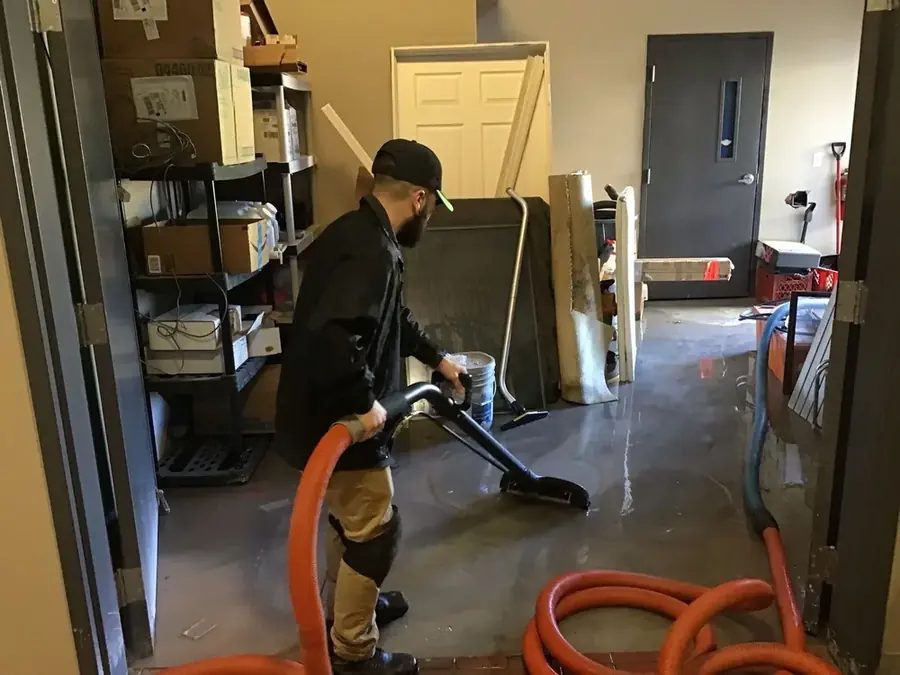
The faster standing water comes out, the less of your home it ruins. The Milwaukee extraction crew clears it with truck-mounted and portable pumps, then starts drying the same visit.
Extraction is the first and most important phase of any water damage job, because standing water does its worst work in the first hours. Every hour it sits, it wicks deeper into subfloor, drywall, and stored belongings and moves toward the lowest point of your Milwaukee home. Getting it out fast is what saves flooring, walls, and the cost of a bigger tear-out later, so the crew leads with powerful extraction and rolls straight into drying.
Why speed matters most
Water follows predictable paths, and the clock is what decides how much damage it does:
It wicks up drywall and into the bottom plate of walls
It runs under flooring and into the subfloor where it hides
It travels along joists to rooms away from the source
It soaks pad, carpet, and anything stored on the floor
Beating that spread is the whole point of fast extraction. The Ready.gov flood recovery guidance stresses the same point about acting quickly.
The equipment on the truck
Different situations need different tools, and the crew brings the right one:
Truck-mounted extractors for high-volume standing water
Submersible pumps for a flooded basement or deep water
Portable extractors and weighted wands for carpet and pad
Moisture meters and thermal imaging to find hidden water
The crew does not just clear what you can see; it finds the water that has already traveled and pulls it out too.
Standing water in your home? The faster it comes out, the less you lose. Call and a Milwaukee crew is dispatched, 24/7.
Extraction and structural drying are two halves of one job. Once the standing water is out, materials that cannot be dried come out, then air movers and commercial dehumidifiers pull the remaining moisture from framing, block, and subfloor to a verified target. The crew monitors daily and documents the loss with readings and photos, whether the source was a burst pipe, a storm, or a failed pump, with claim-ready documentation for your carrier.
How it works
How water extraction is handled in Milwaukee
1
Call & dispatch
A dispatcher answers 24/7 and the nearest Milwaukee crew rolls with truck-mounted pumps, air movers, and moisture meters.
2
Find the source & the reach
The mitigation team stops the water at the source and maps how far it spread, including what soaked into subfloor, block, and wall cavities.
3
Extract & dry
The extraction crew pulls the standing water, then runs air movers and dehumidifiers to a verified dry standard, not just the surface.
4
Verify & document
The drying team logs moisture readings until the structure is dry, then documents the loss with claim-ready photos and readings.
Cost
What does water extraction cost in Milwaukee, WI?
In Milwaukee, WI, water extraction and removal typically runs $500 to $3,500 as the first phase of a job, depending on the volume of water and the affected area. Extraction is usually followed by structural drying, which is priced with it.
See a fuller range with the water damage cost calculator. Most water damage is covered by insurance, and the restoration contractor documents the loss for your carrier.
Water damage in Milwaukee or Milwaukee County? Call (414) 895-6813, 24/7.
Service area
Every Milwaukee neighborhood covered
Milwaukee, WI
The response team covers the East Side, Bay View, Riverwest, Sherman Park, Washington Heights, Walker's Point, and every corner of Milwaukee County, day or night.
The response team answers 24/7 and rolls with truck-mounted and portable extraction. Pulling water starts on arrival, because the first hours matter most.
Can I just use a wet vacuum myself?
A shop vacuum can clear a small spill, but it cannot pull water from a subfloor, a wall cavity, or a soaked pad, and it will not reach the water that has already wicked out of sight. Professional extraction and drying is what prevents a bigger problem.
Do you remove the wet carpet and pad too?
The crew extracts as much water as possible from carpet, then decides with you what can be dried in place and what should be removed. Pad that is soaked or contaminated is usually removed so the floor can dry.
What happens right after extraction?
Structural drying. The crew sets air movers and dehumidifiers and dries the framing, subfloor, and any wet masonry to a verified target, monitoring daily until the readings confirm it is dry.
Is extraction covered by insurance?
When the water loss is covered, extraction is part of the covered mitigation. The crew documents it with photos and readings for your carrier along with the rest of the job.
24/7 emergency dispatch
Milwaukee's water damage crew is standing by
Water sitting means damage spreading. Call Milwaukee Foundation & Waterproofing and a Milwaukee crew is dispatched, 24/7.