When water weeps through an old stone or block foundation, the mitigation team finds where it gets in, dries the wall and framing properly, and lays out how to keep it out.
Many Milwaukee basements are ringed by stone rubble or concrete block walls that are a century old, and under enough outside water pressure they weep. Seepage is not a burst or a flood, it is water finding a path through joints, cracks, and porous masonry during a spring melt or a hard rain. Left alone it soaks sill plates, studs, and stored belongings and invites mold, so the crew dries it properly and helps you cut off the source.
How water gets through a foundation wall
Seepage has a cause, and finding it is half the job. In Milwaukee homes it most often traces to:
Hydrostatic pressure from a saturated yard pushing water through block cores
Cracks and deteriorated mortar joints in old stone or block walls
Grading, downspouts, or window wells that send water toward the wall
A high water table after a long wet stretch or rapid snowmelt
The path matters because drying a wall without cutting off the source just buys time. The EPA runoff guidance covers simple exterior fixes like extending downspouts and regrading.
Why seepage needs real drying, not a wipe
A damp wall looks minor, but the water travels into places you cannot see:
Into the bottom plate and studs of a finished wall
Behind paneling and insulation where it cannot evaporate
Along the cold joint where the wall meets the slab
Into stored cardboard, wood, and fabric against the wall
That is why wiping the surface does nothing, the moisture is inside the assembly. The crew measures it and dries it out with the right equipment for masonry.
Wall weeping every time it rains? Call for a same-day look, and the crew dries it right and shows you how to stop it.
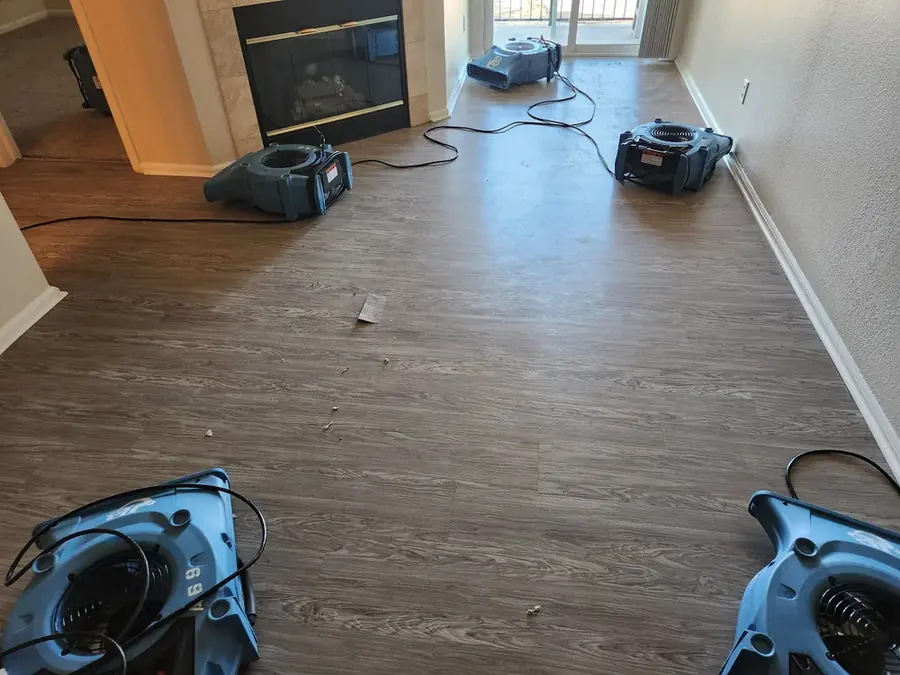
The mitigation team starts by finding where the water enters with moisture meters and a careful look at grading, joints, and window wells. Wet finishes come out only where needed, then the block, mortar, sill, and framing dry with air movers and a desiccant dehumidifier sized for masonry, which gives up moisture slowly. Daily monitoring holds to a verified target so mold cannot start, and you get a plain plan for the exterior and drainage fixes that keep it out, plus sump pump recommendations if the pit is part of the problem.
How it works
How foundation seepage is handled in Milwaukee
1
Call & dispatch
A dispatcher answers 24/7 and the nearest Milwaukee crew rolls with truck-mounted pumps, air movers, and moisture meters.
2
Find the source & the reach
The mitigation team stops the water at the source and maps how far it spread, including what soaked into subfloor, block, and wall cavities.
3
Extract & dry
The extraction crew pulls the standing water, then runs air movers and dehumidifiers to a verified dry standard, not just the surface.
4
Verify & document
The drying team logs moisture readings until the structure is dry, then documents the loss with claim-ready photos and readings.
Cost
What does foundation cost in Milwaukee, WI?
In Milwaukee, WI, drying out foundation and wall seepage typically runs $900 to $4,000, depending on how far the water spread into framing and finishes and how saturated the masonry is. Surface dampness on bare block is at the low end; a soaked finished wall is higher.
See a fuller range with the water damage cost calculator. Most water damage is covered by insurance, and the restoration contractor documents the loss for your carrier.
Water damage in Milwaukee or Milwaukee County? Call (414) 895-6813, 24/7.
Service area
Every Milwaukee neighborhood covered
Milwaukee, WI
The response team covers the East Side, Bay View, Riverwest, Sherman Park, Washington Heights, Walker's Point, and every corner of Milwaukee County, day or night.
It is not as urgent as a burst pipe, but it should not wait. The water soaks the sill plate, studs, and anything stored against the wall, and a wall that seeps repeatedly will grow mold. Call (414) 895-6813 for a same-day assessment.
Can you stop the water, or just dry it?
The crew dries the wall and framing and diagnoses the source, then lays out the exterior and drainage fixes, such as regrading, extending downspouts, or clearing window wells, that cut it off. Interior drying plus source control is what actually solves it.
Why is my basement wall wet only after heavy rain?
That points to outside water pressure. A saturated yard, poor grading, or a downspout dumping near the wall raises the pressure against old block or stone until water finds a path through the joints and pores.
Does homeowner insurance cover seepage?
Long-term seepage and groundwater are often excluded, while a sudden covered event may not be. The restoration contractor documents the situation honestly so you know where you stand, and the focus is on drying it properly and preventing the next time.
Will drying the wall get rid of the musty smell?
A musty smell is moisture in the masonry and framing. Once the crew dries the assembly to a verified target the smell goes with the moisture. If materials were already affected, what cannot be saved is removed.
24/7 emergency dispatch
Milwaukee's water damage crew is standing by
Water sitting means damage spreading. Call Milwaukee Foundation & Waterproofing and a Milwaukee crew is dispatched, 24/7.